

Acne Scar Treatment Singapore
Acne Scar Treatment Options
Discover the EHA Scarfade Program — a medically guided approach combining PICO Laser, Gold RF Microneedling, Digital Peel, Skinboosters, and subcision to improve the appearance of acne scars, injury scars, and pigmentation, tailored to your skin’s needs.
- Reduce Scars
- Reduce Pigmentation
- Improve Acne Scar
- Clear Skin
EHA ScarFade Program
Discover the EHA Scarfade Program — a medically guided approach combining PICO Laser, Gold RF Microneedling, Digital Peel, Skinboosters, and subcision to improve the appearance of acne scars, injury scars, and pigmentation, tailored to your skin’s needs.
- Reduce Scar
- Reduce Pigmentation
- Improve Acne Scar Appearance
- Clear Skin
EHA ScarFade Program

Procedure Type
Lasers, Microneedling, Injectable, Energy-Based Treatments, Subcision

Result
Reduce appearance of deep-pitted scars and improve overall skin texture
*Results varies with individuals

Downtime
Varies between treatments

Treated Areas
Face and neck

Procedure Time
30-60 minutes
Understanding Scars
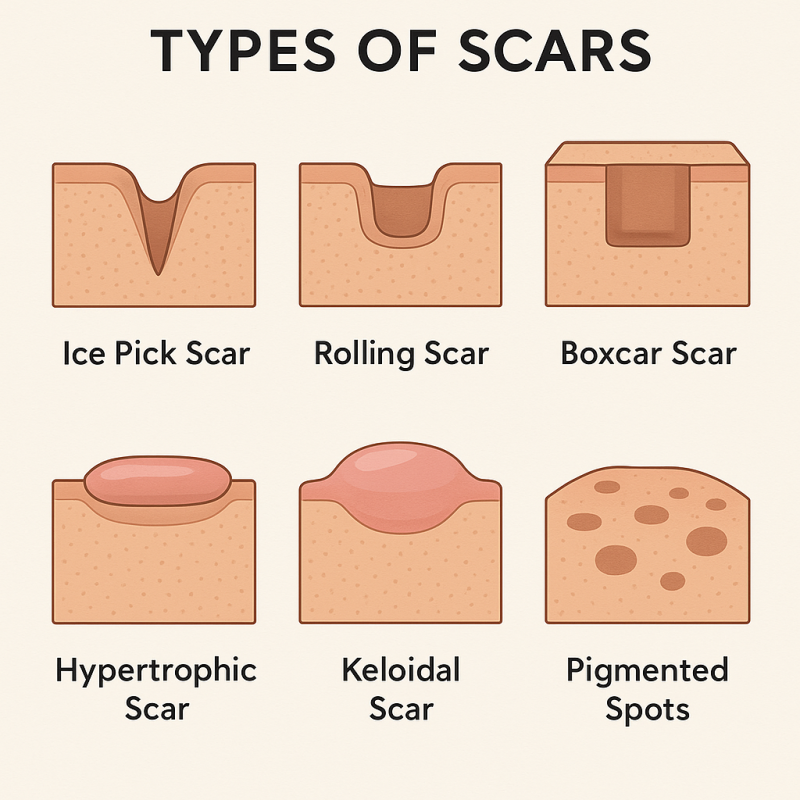
Scars form when the skin repairs itself after an injury, acne, surgery, or inflammation. Their appearance depends on how the skin heals, the depth and type of injury, skin type, and collagen response.
Common scar types include:
Acne Scar Subtypes
Ice Pick Scars – Narrow, deep, V-shaped scars that extend into the dermis, giving the skin a “punctured” appearance.
Rolling Scars – Broad depressions with sloping edges, giving the skin a wavy or uneven look.
Boxcar Scars – Broad, U-shaped depressions with sharp edges, often caused by inflammatory acne.
Other Scar Types
Hypertrophic Scars – Raised scars that remain within the original wound boundary.
Keloidal Scars – Raised scars that grow beyond the original wound boundary due to excessive collagen formation.
Pigmented Spots (Post-Inflammatory Hyperpigmentation) – Dark marks left behind after acne or injury, caused by excess melanin production.
Post-Inflammatory Erythema – Red or pink marks following inflammation, related to residual blood vessel changes.
What is EHA ScarFade Program?

The Scarfade Program is designed for individuals who want to address both the texture and colour of scars. By combining multiple treatment methods, the program targets:
Depressed or tethered scars
Raised or thickened scars
Pigmentation and redness associated with healed wounds
Irregular skin texture from previous acne or injury
Who is the Program For?
The EHA Scarfade Program may be suitable for individuals with:
Acne scars (ice pick, rolling, boxcar)
Depressed or tethered scars from previous skin injuries
Raised scars (hypertrophic or keloidal)
Pigmented marks or redness following acne or wounds
A medical consultation is required to determine suitability based on scar type, skin condition, and treatment goals.
What is Included in the Program?

PICO Laser
Pico laser uses ultra-short pulses of energy to target inflammation, pigmentation, and acne-related bacteria without damaging surrounding skin. It is commonly used to support acne management and reduce post-acne marks. Treatment settings and frequency are adjusted based on individual response and skin sensitivity.
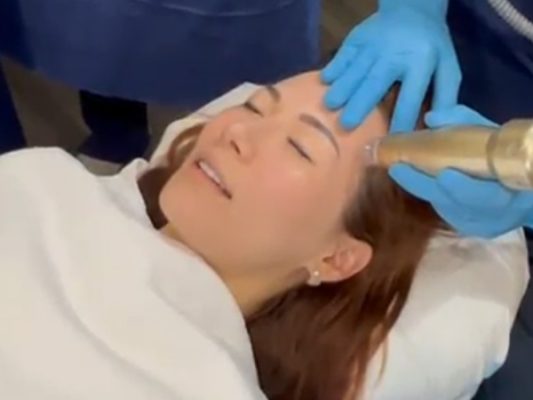
Gold RF Microneedling
Combines controlled microneedling with radiofrequency energy to stimulate collagen remodelling and improve scar firmness and elasticity.

MultiFrax Digital Peel
Fractional resurfacing to smooth uneven skin surfaces and promote new skin formation, useful for rough or thickened scar tissue.
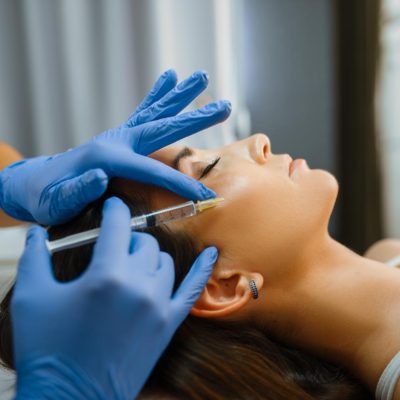
Skinbooster
An injectable blend containing hyaluronic acid, vitamins, amino acids, and antioxidants that supports skin hydration and regeneration.
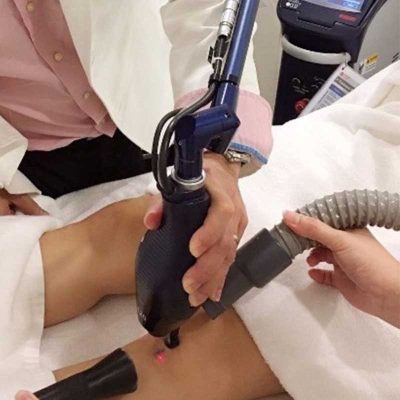
Fractional CO2 Laser
Uses a carbon dioxide laser in a fractional mode to create micro-columns in the skin. This stimulates collagen regeneration, smooths uneven textures, and can be effective for atrophic acne scars such as ice pick, rolling, and boxcar scars.
How does the program work?
The EHA Scarfade Program is built around the principle that no single treatment can address all aspects of scarring. Different scar types and depths require different techniques, so the program layers multiple modalities over a treatment period to improve skin texture, colour, and structure.
Step 1: Medical Consultation and Scar Analysis
The process starts with an in-person assessment by a doctor.
The type of scar (e.g. ice pick, rolling, boxcar, hypertrophic, keloidal, pigmented spots) is identified.
The depth, size, location, and skin type are noted, along with any relevant medical history.
Factors such as skin healing ability, downtime tolerance, and lifestyle are considered before creating a treatment plan.
Step 2: Personalised Treatment Planning
Based on the assessment, a customised sequence of treatments is designed.
Not all listed treatments will be used for every patient — the choice depends on scar type and clinical suitability.
The plan typically combines:
Texture resurfacing (Fractional CO₂, Multifrax)
Pigmentation targeting (PICO Laser)
Collagen stimulation (Gold RF Microneedling)
Skin quality support (SkinBooster)
Step 3: Treatment Execution
The program is carried out over multiple sessions, usually spaced weeks apart to allow for healing and collagen remodelling.
Example sequence for atrophic acne scars:
Subcision to release tethered scars.
Fractional CO₂ for deep texture resurfacing.
Pico Laser for pigmentation improvement.
Gold RF Microneedling for collagen and vascular targeting.
Multifrax to refine surface irregularities.
Skinbooster injections to boost hydration and support skin repair.
Example sequence for mixed scars (texture + pigment + redness):
Pico Laser to reduce pigmentation.
Gold RF Microneedling to stimulate collagen and reduce redness.
Fractional CO₂ for deeper resurfacing.
Skinbooseters for skin nourishment.
Step 4: Recovery and Home Care
After each treatment, the skin will go through a recovery phase.
Downtime varies depending on the procedure — for example, fractional CO₂ may require several days of redness and flaking, while Pico Laser typically has minimal downtime.
Specific aftercare instructions are provided to support healing and protect results (e.g. sun protection, gentle skincare).
Step 5: Progress Review and Adjustment
The doctor reviews the skin’s response at follow-up visits.
The treatment plan may be adjusted — for example, adding extra sessions for persistent scars or spacing treatments further apart if the skin needs more recovery time.
Maintenance treatments may be recommended to preserve improvements.
Frequently Asked Questions (FAQs)

1. What is the ScarFade Program?
The ScarFade Program is a customised skin treatment plan to reduce the appearance of scars—such as acne scars, surgical scars, or other skin injuries—by combining appropriate modalities (e.g. laser therapy, microneedling, chemical peels, topical treatments, etc.). The goal is improvement in texture, colour, and blend of the scar into surrounding skin rather than complete removal.
2. Who is suitable for the ScarFade Program?
You may be suitable if you:
Are in good general health
Have mature scars (i.e. fully healed, stable in colour)
Do not have active infections or skin diseases in the affected area
Are not prone to poor healing (e.g. keloid formation, if relevant)
Have realistic expectations about what can be achieved
During consultation, our clinician will assess scar type, depth, skin type, medical history (including any propensity for abnormal scarring) to determine suitability and develop a personalised plan.
3. How many sessions are needed, and how often?
This depends on:
The type and severity of the scar (depth, texture, pigmentation)
The treatment modalities selected (laser, microneedling, peels etc.)
Your skin’s response to treatment
Typically, multiple sessions over weeks to months are required. We’ll recommend a schedule based on your individual assessment.
4. What kinds of treatments are involved?
Treatments in the program may include one or more of:
Laser therapy (colour correction or resurfacing)
Microneedling or fractional radiofrequency
Chemical peels
Topical treatments (creams, serums, supporting skincare)
Home care regimes (sun protection, gentle cleansing, etc.)
Each treatment’s risks, benefits, and aftercare will be explained during your consultation.
5. What are the expected outcomes? When will I see improvements?
Some improvement may be noticeable within a few weeks (e.g. in colour, texture) after initial sessions.
More significant changes usually appear after multiple sessions, often over 2-3 months or longer depending on the scar’s nature.
While improvement is achievable, scars may not vanish completely. The objective is enhancement rather than perfection.
6. What are the risks, side effects, or possible complications?
Potential risks include:
Temporary redness, swelling
Discomfort or mild pain during/after treatment
Hyperpigmentation or hypopigmentation in some skin types
Irritation, peeling, or crusting
Risk of infection if aftercare is not followed
Your clinician will go through contraindications (e.g. if you have certain skin disorders, are pregnant, have certain medications or medical conditions) and ways to reduce risks.
7. What is the recovery time or downtime?
Depends on the treatment(s): some treatments have minimal downtime; others may cause peeling, redness, or sensitivity lasting a few days to a week.
You’ll need to follow aftercare instructions (e.g. avoid sun exposure, use gentle skincare) to help healing.
8. How much does the ScarFade Program cost?
Cost varies depending on:
Number of sessions required
Type of treatments used in your plan
Severity / size of the scar area
Any additional skincare or topical medications prescribed
You will receive a full, itemised quote after your consultation.
9. Are the results guaranteed?
No. While we strive for good outcomes using clinically accepted methods, results vary based on your skin’s response, your scar type, your commitment to aftercare, lifestyle (e.g. sun exposure), and medical history. We do not guarantee full scar removal or specific numerical outcomes.
10. Will I need maintenance treatments?
Possibly. Scars and skin health can change over time, influenced by ageing, sun damage, or further skin injury. Periodic follow-ups or top-ups may be recommended to maintain or enhance results.
11. What should I do before coming for treatment?
Disclose full medical history, including any skin treatments, medications, or conditions
Avoid sun exposure and tanning; protect skin with sunscreen
Avoid certain skin products (like strong acids, retinoids) if instructed, prior to treatment
Follow any other pre-treatment instructions given by the clinic (e.g. stopping certain medications, avoiding certain cosmetic treatments)
12. What happens at the consultation?
You can expect:
Detailed medical and skin history review
Assessment of the scars: type, depth, size, colour, location
Discussion of possible treatment options, their benefits and risks
Explanation of expected outcomes and timelines
Provision of an itemised cost estimate
Discussion of aftercare and your role in results
13. Is this treatment covered by MediSave or insurance?
In most cases, scar improvement / cosmetic scar treatments are considered aesthetic or non-medically essential; hence, they are not covered by MediSave or standard medical insurance. It’s best to check with your insurer for your specific policy.
14. Are there any contraindications (situations where the treatment is not suitable)?
Some common contraindications may include:
Active skin infection or inflammation in treatment area
History of poor wound healing or keloid formation
Certain medical conditions or medications that impair healing
Very recent scar (not fully healed)
Pregnancy or breastfeeding (depending on specific treatment)
Your clinician will evaluate these during consultation.
15. How do I schedule a consultation?
You can reach us via phone, email, or via the booking form on our website. We will provide you with guidance on what to bring / prepare, clinic location, and available appointment times.
Meet your EHA Clinic Doctor

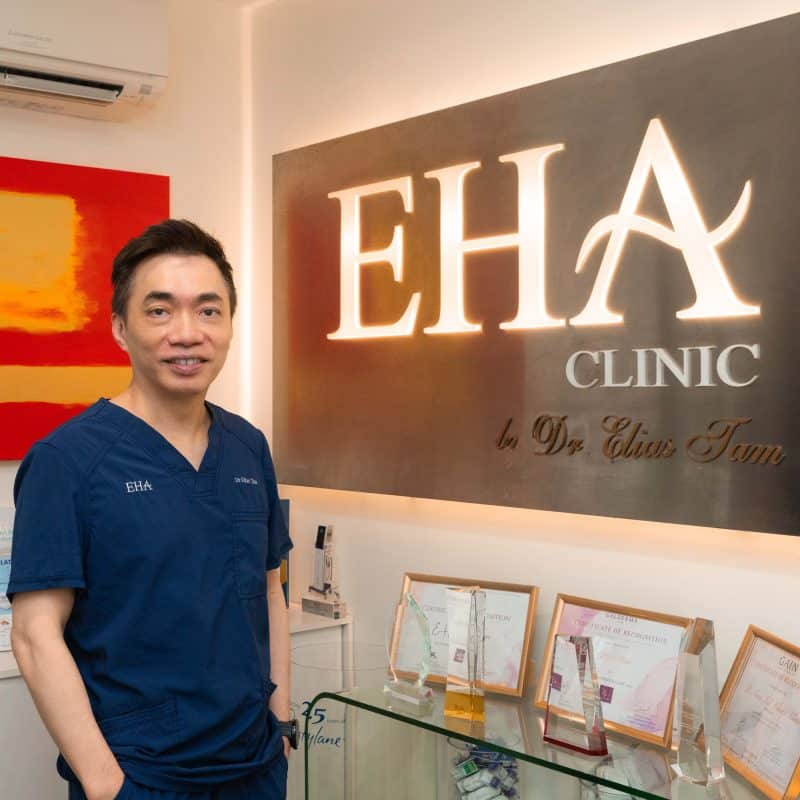
Dr. Elias Tam, the Doctor Trainer
Dr. Elias Tam, with over 30 years in medicine, leads EHA Clinic, focusing on advancing technical standards in aesthetic medicine. He holds the position of Clinical Lecturer at University College London. Throughout his many years as an aesthetic doctor, Dr. Tam has held multiple hands-on training sessions and seminars, sharing his vast knowledge and expertise with aspiring doctors in the field.
Under his guidance, EHA Clinic offers a safe and comprehensive range of aesthetic treatments for the face, body, and hair; including clinically established treatments such as hair transplants, non-surgical face-lifting, body sculpting, fillers and other injectable treatments.
Interested in EHA Revitalift Program?
Alternatively, reach out to us for a non-obligatory consultation